


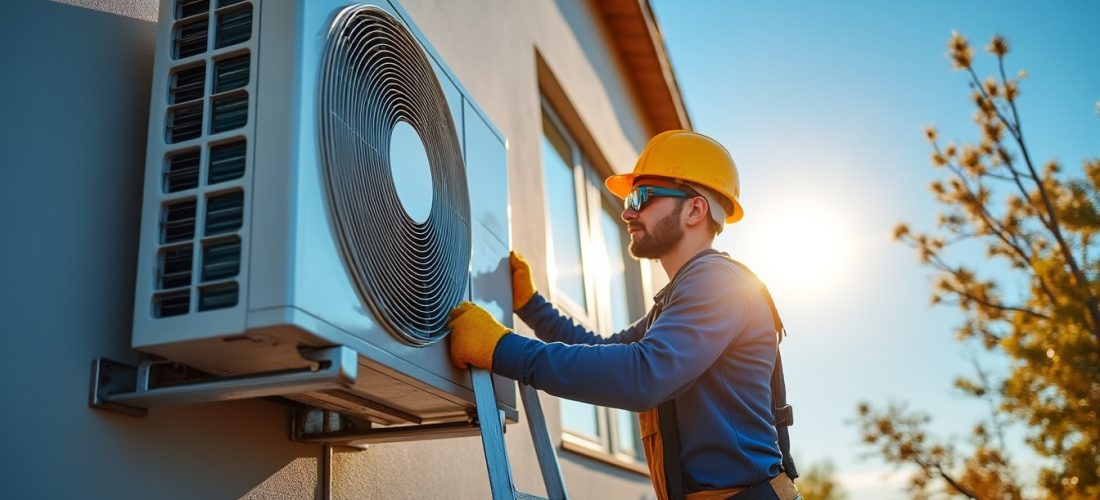
Heatwaves have become a recurring threat to comfort and health across many regions, prompting active measures at home and in the workplace. Proper installation and pose of a climatisation system can materially reduce indoor température spikes while preserving energy use.
Practical choices about system type, sizing, and régulation define whether a space remains safely frais during an intense canicule. The short list of essentials follows immediately to guide initial decisions.
A retenir :
- Correct sizing of system relative to living area and insulation
- Preference for reversible systems for year-round energy efficiency
- Professional RGE installation for safety and warranty compliance
- Temperature setpoints around mid-20 degrees for balanced comfort
Selecting the right climatiseur type for canicule resilience
Building on the key takeaways, selecting a system type starts with usage patterns and space layout. The first decision affects noise levels, running costs, and the potential for long term régulation of indoor température.
Homes with intermittent occupation may accept a portable unit, while year-round living spaces benefit from a split or reversible setup. Choosing the appropriate system prepares the route to efficient maintenance and optimal comfort.
Below is a compact table comparing common systems and their typical strengths and weaknesses. This comparative view helps select the model before discussing financing and installation.
System Strengths Weaknesses Best use Monobloc Low upfront cost, compact footprint Noisy, lower efficiency Temporary rooms, small apartments Split Quiet operation, efficient cooling Requires outdoor unit, moderate cost Bedrooms, living rooms Reversible (heat pump) Year-round use, good SEER/SCOP ratios Higher initial investment, requires sizing Primary residences Gainable Discrete aesthetic, uniform distribution High installation complexity and cost Large homes, renovations
According to ADEME, efficiency labels and correct sizing heavily influence lifecycle consumption and emissions. Selecting a system with a strong SEER rating reduces operational costs over time.
Consideration of users sensitive to heat should guide final choice and controls, especially where elderly occupants require precise régulation. The next section addresses incentives and installation prerequisites to support that choice.
Financial aids, regulations, and professional pose for reliable installation
Following system selection, funding and formal installation conditions determine project feasibility and compliance. Grants and reduced VAT often make higher-efficiency systems financially attractive for owners.
According to Santé Publique France, energy-efficient installations also yield public health benefits by reducing indoor overheating risks. An RGE-certified installer preserves warranty and supports claim eligibility.
Installation choices should include an initial survey, piping plan, and electrical verification to ensure safety and effective pose. Proper documentation simplifies access to programs like MaPrimeRénov’ and related energy certificates.
Installation priorities:
- Proper unit sizing matched to room volume and insulation
- Correct refrigerant handling and compliant piping routing
- Electrical supply adequacy and dedicated circuit protection
- Outdoor unit placement for airflow and noise reduction
« I had my reversible unit installed last year and the difference was immediate, especially during long heat spells. »
Marie L.
« The installer explained the financial aids clearly, which made the decision much easier for our family. »
Jean P.
According to Météo-France, heatwave frequency has increased, making subsidy use sensible for many households. Using those resources can turn an expensive upgrade into a cost-effective resilience measure.
Professional steps during installation and verification
This subsection links to installation priorities and explains necessary verification steps performed by certified teams. Inspectors verify refrigerant charge, electrical connections, and sealing to guarantee declared performance.
Post-installation, the installer provides a compliance certificate and a maintenance plan with recommended inspection intervals. That paperwork is necessary to preserve warranty and to access future energy audits.
Table of typical installation milestones and timing
Milestone Typical duration Responsible party Initial survey and sizing 1 to 3 days Installer / technician Permit and documentation Variable by region Homeowner / installer Physical installation 1 to 3 days Installation team Commissioning and testing Half to one day Installer
Routine maintenance protects performance and extends equipment life, and simple checks avoid early degradation. The following section turns to daily operation and user behavior to maximize comfort and savings.
Daily operation, réglage, and maintenance for sustained frais comfort
Following correct installation and commissioning, daily operation habits dictate both comfort and energy consumption. Effective régulation with timers or thermostats prevents overcooling and reduces wear on the system.
Setpoint guidance recommends mid-20 degrees for balance between comfort and efficiency, avoiding large gaps with outdoor temperatures to reduce physiological shock. Use of fans and shading complements the system and lowers runtime.
Operation checklist:
- Maintain thermostat at moderate setpoint around twenty four to twenty six degrees
- Use night ventilation when outdoor temperatures drop sufficiently
- Clean or replace filters every two to three months depending on use
- Schedule annual professional inspection before peak summer
« I learned to use timers and the house stayed comfortable while lowering the electricity bill noticeably. »
Lucie B.
Small behavioral changes often produce measurable savings without sacrificing comfort, and simple measures reduce strain on the grid during peak été demand. The final practical tip prepares homeowners for anticipated hot spells.
Practical tips for peak canicule periods:
- Close blinds during afternoon heat to limit solar gains
- Use ceiling fans to enhance perceived cooling effect
- Avoid setting temperature more than eight degrees below outside
- Turn off unused room units to concentrate cooling where needed
« Our office stayed productive through a recent heatwave because the system was sized correctly and maintained. »
Thomas N.
Source : ADEME ; Santé Publique France ; Météo-France.


