


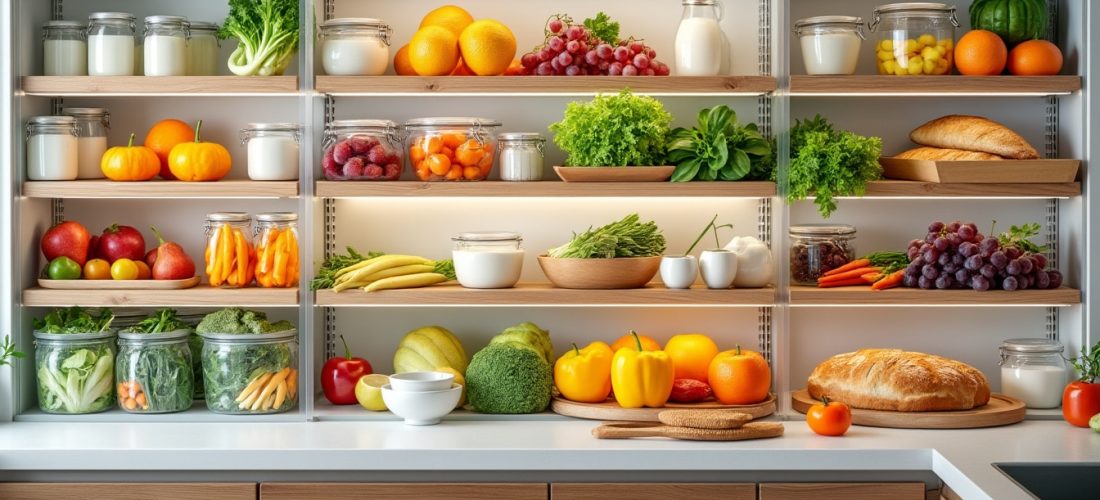
Households waste a large share of fresh food when storage conditions are inappropriate, and simple design changes reduce losses. Properly designed ventilated units stabilize humidity and airflow, extending edible life for many items.
Practical measures combine zoning, visibility, and minimal refrigeration to prolong freshness while lowering energy and waste impacts. The following concise takeaways guide choices for a ventilated garde-manger and daily handling.
A retenir :
- Ventilated storage with humidity controlled zones for prolonged freshness
- Drawer modules with slatted shelves for visibility and airflow
- Separate compartments for ethylene producers and sensitive vegetables
- Small refrigerator compartment for dairy meat and short term cold storage
Design and airflow for a ventilated garde-manger
Following the key points above, physical design determines how air and moisture circulate through the storage unit. Attention to slatted drawers, a rear air gap, and selective insulation creates measurable benefits for produce.
Practical sizing and materials influence longevity and usability for everyday cooking and seasonal harvests. This section details features and recommended dimensions before explaining zoning and ambient setups.
Feature Function Recommendation Slatted drawer Improves airflow and visibility 15 cm high, 40–50 cm deep Rear air gap Prevents stagnation and rot 3–4 cm continuous gap Dark-lined drawer Limits tuber germination Use linen or jute lining Small fridge module Stores dairy and meat safely Approximate 40 L capacity
Slatted drawers and visibility
This subsection links design to daily handling by explaining drawer advantages for the user. Slatted drawers keep items visible and stop piles that hide older food from view, improving first-in first-out rotation.
Users gain convenience and reduce waste by seeing all items at a glance and avoiding forgotten produce. According to Low-tech Lab, direct visibility is a major factor in reducing domestic losses.
Practical storage tips:
- Place heavier root vegetables at the back on ventilated slats
- Store soft fruits on top layers for quick access
- Use removable crates for weekly rotation and washing
- Label drawer fronts with category and arrival date
Rear air gap and humidity control
This part links the rear gap to humidity regulation and spoilage prevention in the unit. A 3 to 4 cm air channel avoids trapped moisture and supports balanced humidity controlled zones for produce.
Materials such as untreated wood or breathable textiles moderate local moisture without sealing the compartment. According to ADEME, ventilation and relative humidity management significantly extend shelf life for many vegetables.
« I fitted slatted drawers and noticed my carrots and onions lasted far longer than before. »
Jean D.
Image illustrating airflow and drawer design
Zoning ambiances for different food types and storage
Building on design features, zoning allocates the right ambiance to each food type to avoid ethylene damage and uneven ripening. Proper grouping separates climacteric items from sensitive produce and reduces cross-effects.
Ambiances include dry lit, dry dark, cool humid, and cold refrigerated niches that suit various fruits and vegetables. The next part presents a compact table mapping foods to recommended ambiances for practical use.
Dry, ventilated, and lit zones for quick-use produce
This H3 links lit, ventilated niches to items that tolerate light and need airflow to avoid mold. Examples include tomatoes, eggplants, and citrus, which do well in moderate light with steady airflow.
Ambiance Typical items Notes Dry, lit, ventilated Tomato, aubergine, citrus Avoid direct sun; ensure airflow Dry, dark, ventilated Potato, onion, garlic Limits germination; use dark lining Cool, humid, dark Artichoke, cucumber, butter in mid-season Use sand or evaporative cooling for humidity Cold refrigerated Dairy, meat, cooked leftovers Keep in small fridge module at 4°C ideally
Humidity control measures:
- Use a damp sand drawer for long carrots and roots
- Line selected drawers with breathable linen or jute fabric
- Ensure a continuous rear air gap of three to four centimetres
- Avoid sealing produce in non-breathable plastic in ventilated zones
Dark, cool, and humid niches for tubers and delicate greens
This section explains how darker niches prevent premature sprouting and slow respiration in tubers and squashes. Simple dark linings and deeper drawers reduce light exposure and help maintain stable humidity for roots.
According to Low-tech Lab, dark, slightly humid drawers are essential for potatoes and onions to keep texture and flavor. The following video demonstrates a classic low-tech evaporation cooler for small setups.
Practical demonstration video
Image showing dark-lined drawers and root storage
Operational habits to prolong freshness and reduce food waste
After spatial design and zoning, daily habits determine whether the system reduces waste as intended. Simple routines such as rotation, labelling, and selective refrigeration keep products fresh longer and simplify meal planning.
The final practical section covers shopping choices, freezing strategies, and small refrigeration use to secure longer storage. These habits complement the ventilated garde-manger and prepare households for seasonal abundance.
Shopping, rotation, and short-term handling
This subsection links purchasing patterns to storage effectiveness by emphasizing quantity control and frequency of rotation. Buy with a view to available drawer space, and rotate older items forward to be used first.
According to Zero Waste France, planning meals and checking existing stock prevents many avoidable losses at the consumer stage. Use simple labels and weekly checks to maintain order and avoid overbuying.
Kitchen organization rules:
- Check drawers weekly and plan recipes around older items
- Store ethylene producers separately from sensitive produce
- Keep a visible list of contents on the unit door
- Reserve the small fridge only for high-risk perishable items
« I stopped buying bulk greens without a plan, and spoilage dropped dramatically. »
Marie L.
Freezing, packaging, and long-term storage strategies
This text links freezing to long-term waste reduction and practical containment solutions such as reusable freezer bags. A good freezer complements the garde-manger for items that cannot be preserved short term.
According to product information and household tests, reusable ISTAD-type bags simplify portioning and freezer organization while preserving flavors. Combine freezing with clear labelling to optimize retrieval and thawing.
« Using sealed reusable bags and small portions saved space and reduced freezer waste. »
Paul N.
Short instructional clip on bagged freezing and portioning
Image of frozen portions neatly stored and labelled
« A compact fridge module cut our electricity use while keeping dairy safe. »
Expert N.
Source : Pierre-Alain Lévêque, « Garde-Manger permettant les bonnes ambiances de conservation par type d’aliment », Low-tech Lab, 2019.


