


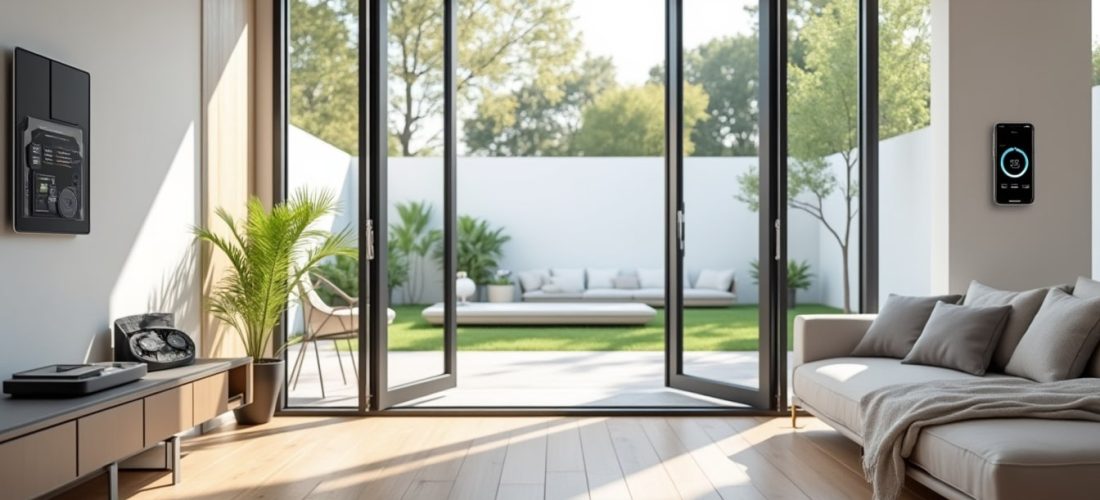
Modern homes evolve through more than architecture and materials, they adopt smart technology. This change places the minimalist window at the center of living spaces and energy strategies.
When combined with home automation, these openings manage light, ventilation, and thermal comfort precisely. Practical examples and design choices will guide your choices toward efficient implementation, so read the key points that follow.
A retenir :
- Passive daylight optimization through minimalist frames and high-performance glazing
- Automated natural ventilation for night cooling and humidity control
- Integrated sensors enabling smart opening, air quality monitoring, and alerts
- Remote control and security features with multi-point locking systems
Designing minimalist frames for automated window openings
Building on those key points, design choices determine how automation fits with minimalist window openings. Selecting narrow profiles and large glazing areas affects both daylight capture and internal airflow performance.
Minimal profiles and glazing performance
This section examines frame types and glazing options that suit automated openings. According to FenêtréA, minimalist frames maximize visible glass and enhance daylighting strategies, and examples compare common solutions across performance metrics.
Frame material options:
- Aluminum slim profiles for maximal glass area
- Timber slim frames for warmer appearance and good insulation
- Composite sections for balanced thermal and structural behavior
- Curtain wall systems for continuous glazing and large spans
Frame type Visible glass Thermal performance Aesthetic Aluminum slim High Medium with thermal break Minimal, industrial Timber slim High Good Warm, refined Composite Medium Good Versatile Curtain wall Very high Variable Monolithic glass appearance
Integration of motors and concealed fittings
This subsection describes concealed motorization and how mechanics preserve minimal aesthetics. According to Schüco, flexible ferrures allow integration without visible bulk on most frames, preserving the glass emphasis while enabling automated opening and ventilation strategies.
« I retrofitted our living room with motorized slim windows and noticed immediate airflow improvements »
Alice B.
These choices directly affect ventilation potential and energy behavior discussed next, and they influence control strategies and sensor placement for optimal performance.
Automated ventilation strategies for energy-saving openings
Because frame and motor choices shape airflow, ventilation strategies become decisive for energy performance in daily use. Practical programming like night cooling reduces reliance on mechanical cooling when external conditions allow efficient passive exchange.
Night cooling and programmed ventilation
This section explains night cooling mechanics and scheduling for reduced energy consumption. According to Schüco, scheduled openings coupled with temperature sensors enable marked reductions in cooling loads, especially in well insulated buildings.
Automatic ventilation modes:
- Night cooling for lowering indoor temperature overnight
- Humidity purge to control moisture after cooking or showering
- CO2-triggered airing for bedrooms during occupancy
- Scheduled boost ventilation for high-use living areas
Mode Trigger Benefit Suitable for Night cooling External temperature lower than indoor Lower night-time temperatures Residential bedrooms Humidity purge High indoor humidity Reduced moisture and mould risk Bathrooms, kitchens CO₂-triggered airing CO₂ above threshold Improved air quality Bedrooms, dens Scheduled boost Time-based schedule Consistent freshness Living rooms
« Our energy bills dropped noticeably after enabling night cooling on all bedrooms »
Marc L.
Sensors and air quality management
This subtopic links sensors to indoor air quality control and occupant health outcomes. According to Hyline, integrated CO₂ and humidity sensors enable automatic openings when thresholds are exceeded, improving ventilation without user intervention.
Air quality sensor types:
- CO₂ sensors for occupancy-based airing
- Humidity sensors for moisture-triggered ventilation
- VOC sensors for pollutant detection and alerts
- Temperature sensors for comfort-driven actions
Remote monitoring supports continuous adjustments through contrôle à distance and scheduling interfaces, enabling long term optimisation and occupant comfort. With sensors active, security and user interfaces become the focus for daily operation.
Security and remote control for smart window installations
Following energy and air quality gains, security and remote management ensure safe practical usage of automated openings. Designers must balance automated opening permissions with multi-point locks and obstruction detection for occupant safety.
Anti-intrusion and anti-pinch protections
This section assesses anti-intrusion locks and anti-pinch protections for motorized windows. According to Schüco, magnetic sensors and multi-point locking raise resistance to forced entry and integrate with alarm systems for proactive security.
Safety features list:
- Multi-point locking for enhanced forced-entry resistance
- Magnetic sensors for position reporting to alarms
- Anti-pinch detection with automatic reopen function
- Bands of detection for high-risk public spaces
« Automated safety features combine convenience and real protection when well specified »
Tom D.
Anecdotally, facility managers value the automatic reopen function when an obstruction is detected, and these systems meet requirements for schools, hospitals, and hospitality venues. Next steps involve commissioning, app setup, and user training for long-term performance.
Installation scenarios and remote management via apps
This subtopic presents practical installation cases and app-based controls used in homes. Remote control enables immediate closure on rain detection and manual override from smartphones, preserving comfort and safety.
Remote control practices:
- Geo-fencing to close openings when occupants leave
- App schedules for night cooling and daily airing
- Manual override for guest mode and maintenance
- Integration with HVAC and shading for combined actions
« I set up geo-fencing to close windows automatically when I left home »
Elena S.
Users benefit from scheduling, geo-fencing, and integration with broader maison intelligente ecosystems, which simplifies daily management and enhances overall comfort. Further reading on manufacturer documentation supports specification and commissioning for lasting results.


