


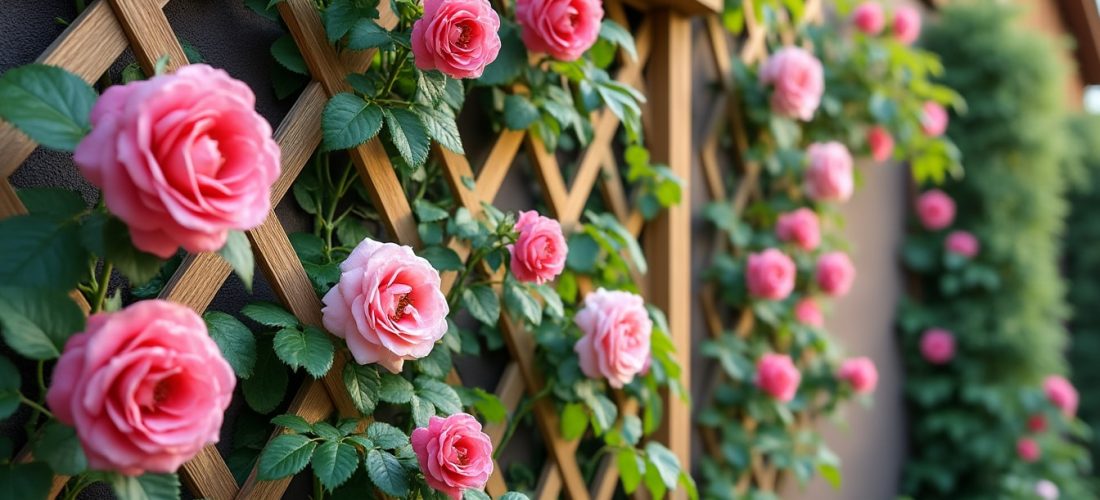
Climbing roses transform walls into lush displays when guided by a reliable support system. Successful growth combines correct planting, thoughtful palisage, and a suitably spaced treillis mural to reduce disease risk.
Proper guidage des plantes encourages flowering by directing vigor into lateral shoots rather than upward stretch. These core practices determine success when installing a treillis mural for rosiers grimpants.
A retenir :
- treillis mural with two to five centimetres air gap
- horizontal wiring every thirty centimetres for even branch support
- soft ties with plastic sleeve to protect delicate canes
- planting at thirty centimetres from wall with thirty degree incline
Material visuals help plan placement and spacing before work begins, and an image clarifies mounting points. Below is a realistic view to compare orientations and expected coverage on a wall.
Choosing a durable trellis mural for climbing roses and long-term growth
Following the takeaways, material choice determines how a support withstands weather and supports mature weight. Selecting the correct structure reduces maintenance and protects the wall while enhancing plant santé.
Metal, treated wood, and quality PVC each offer trade-offs in strength, visual impact, and upkeep for a structure de support. The right pick prepares the mur végétal for vigorous croissance and eases future entretien des rosiers.
Material choice also affects attachment technique and air circulation behind the trellis, which leads into wiring and installation methods discussed next. Proper choices now simplify later pruning and palissage.
Material comparison guide:
- Wood treated, warm aesthetic, moderate maintenance required
- Galvanized metal, high durability, low maintenance needs
- PVC composite, rot-proof, lower long-term strength than metal
Material Durability Maintenance Aesthetic Pressure-treated wood Moderate Periodic sealing Natural warmth Galvanized steel High Minimal Industrial sleek Stainless steel cable Very high Minimal Discrete PVC composite Moderate-high Low Clean plastic look
« I installed a stainless steel cable system and saw less damage after storms than with wood »
Marie L.
An instructional video demonstrates anchoring pitons and tensioners for a wired system, clarifying common mistakes. Watching a step-by-step clip helps visualize anchor spacing and cable tensioning.
Attaching the trellis mural to masonry and air circulation
This subsection connects wall attachment to material choice because anchoring methods differ by substrate. Using suitable anchors and spacing preserves airflow and prevents moisture trapping behind the trellis.
Mark anchor heights for the first cable at forty centimetres and subsequent wires every thirty centimetres to distribute weight evenly. These distances encourage a fan-shaped layout for plantes grimpantes and long-term support.
Comparing fasteners and sealing techniques for masonry walls
Choosing pitons, chemical anchors, or expansion plugs depends on wall composition and load expectations. Proper sealing around anchors prevents water ingress and preserves both wall and trellis integrity.
According to horticultural guides, using stainless components reduces corrosion and interaction with ties around stems. The next section addresses how to guide branches once the structure is in place.
« The key was leaving a two to five centimetre gap so the wall could breathe and mildew avoided »
Thomas R.
Having established a reliable support, the next priority is correct palissage to shape growth and maximize flowering. Practical tying and arcure techniques ensure even blossom distribution on a support végétal.
Palissage and guiding rosiers grimpants for balanced flowering
Because structure and materials are set, palissage controls where the plant invests energy and where blooms will appear. Training main canes horizontally stimulates lateral bud formation and repeated flowering.
Soft ties, plastic-sleeved links, and raphia protect bark while holding branches against cables, preventing abrasion. Gentle arcure and fan distribution create an even floral display across the trellis surface.
Tying technique list:
- Attach main canes horizontally with soft, cushioned ties
- Space lateral shoots evenly like a fan for uniform coverage
- Do not tighten ties to allow stem thickening over seasons
Timing palissage with pruning and seasonal growth cycles
This paragraph links pruning timing to palissage because cutting affects where flowers form. Remontant varieties prune late winter while non-remontants are pruned after flowering to preserve buds.
According to experienced gardeners, gradual pruning and selective removal of old wood promotes healthy renewal from the base. Keep a young vigorous shoot to replace any aging charpentière when needed.
Practical steps to arcure charpentières and stimulate lateral shoots
Arcure reduces sap flow speed, encouraging bud development along the cane and improving flowering density on laterals. Fix main branches near horizontal, then distribute secondary shoots for balance.
According to nursery manuals, cutting secondaries above the second bud standardizes bloom position and improves access for pollinators. This prepares the reader for maintenance and seasonal care.
« I trained my rose horizontally and saw new flowering canes appear within the following season »
Anna P.
Maintenance practices follow training because correct watering, feeding, and disease checks sustain bloom quality. Regular inspection of ties and cables prevents damage and preserves the intended form.
Maintenance, seasonal care, and long-term management of a wall-trained rose display
As the rose matures, inspection and gentle adjustments keep the display healthy and attractive. Routine care includes tie replacement, cable tension checks, and targeted pruning for renewal.
Prepare a seasonal calendar for watering, feeding, and disease surveillance to protect blooms and stems. Good practice minimizes heavy interventions and preserves the trellis and wall integrity.
Care checklist:
- Inspect ties and cables twice yearly and after strong storms
- Prune according to remontant or non-remontant flowering pattern
- Ensure mulch and good drainage at the planting base
Task When Purpose Tie inspection Spring and autumn Prevent rubbing and allow stem growth Cable tension check After winter storms Maintain support integrity Pruning Late winter or post-flowering Stimulate renewal and flowering Disease check Monthly during growing season Early detection and treatment
« My wall roses rewarded careful seasonal care with fuller blooms and fewer fungal issues »
Garden Club Review
According to nursery manuals, regular monitoring and responsive care keep a mur végétal flourishing with minimal invasive work. Thoughtful maintenance ensures the trellis and plants age well together.
Source :


