


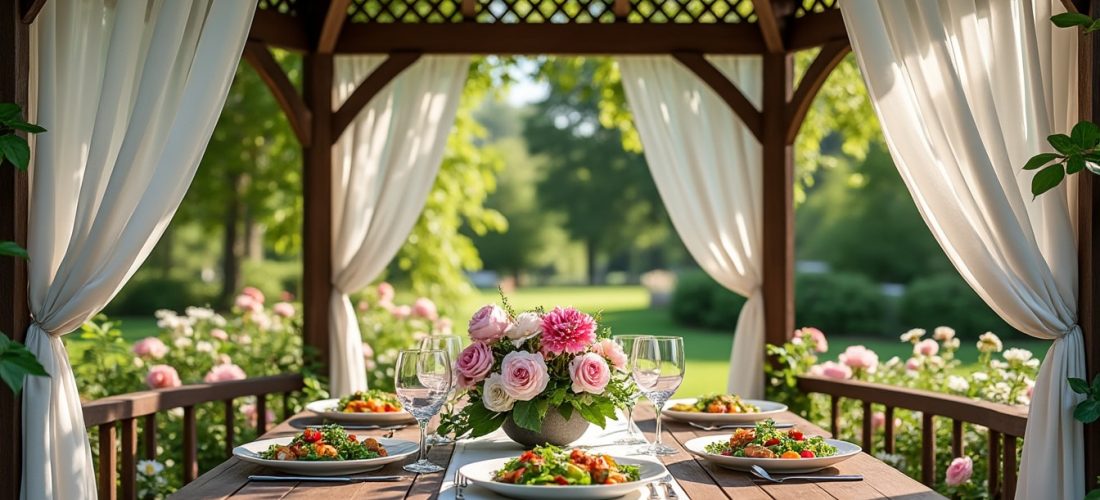
A garden gazebo can turn a simple lawn into an inviting outdoor dining room where family and friends gather. It combines protection from sun and light rain with a defined space for table settings, ambient lighting, and comfortable seating.
Practical choices about materials, placement, and furniture determine whether the structure feels elegant and useful over many seasons. The next concise takeaways highlight core benefits and constraints to guide selection before deeper reading.
A retenir :
- Elegant gazebo with shaded dining area and integrated weather protection
- Versatile outdoor shelter for family meals, barbecues, and small gatherings
- Choice of materials: wood, aluminum, bamboo, wrought iron finishes
- Garden enhancement, terrace zoning, compatibility with furniture and ambient lighting
Choosing gazebo materials for an elegant garden shelter
Building on those quick points, material selection determines durability and aesthetic for garden gazebos. Wood gives warm texture but requires seasonal sealing and attentive maintenance to avoid rot. Metal and engineered materials lower upkeep while offering sleeker silhouettes for modern terraces.
Material Durability Maintenance level Style notes Typical use Wood Moderate to high with care Regular sealing and staining Warm, traditional, versatile finishes Garden rooms and classic terraces Aluminum High resistance to corrosion Low cleaning and occasional checks Sleek, modern, lightweight profiles Terraces and coastal sites Bamboo Moderate, sensitive to moisture Periodic treatment and protective roofing Exotic, natural, eco-friendly appearance Poolside and tropical-style gardens Wrought iron High structural strength Rust prevention and repainting Ornate, classic, durable Formal gardens and decorative zones Composite High, weather resistant Low maintenance and easy cleaning Contemporary, uniform finishes Low-upkeep outdoor dining areas
Materials differ in appearance and practical demands, so homeowners must weigh initial cost against upkeep and style. Selon The Spruce, matching material to local climate reduces maintenance and extends usable life. Careful selection supports both the elegance of summer meals and the structure’s longevity.
Materials for gazebos:
- Timber frames for craftsmanship and classic garden warmth
- Aluminum frames for lightness and corrosion resistance
- Bamboo panels for natural, eco-conscious aesthetics
- Wrought iron for structural presence and decorative detail
« I chose a cedar gazebo because its grain and scent made our terrace feel like an outdoor living room. »
Marie D.
Wood gazebos: warmth, maintenance, and styling options
Within material choices, wood best suits garden settings where warmth and craft details matter. Properly treated timber resists insects and moisture, and periodic staining preserves appearance and strength. An anecdote from a local neighbour shows how yearly varnish prevented a small rot issue from spreading.
Metal and bamboo options: low maintenance and exotic looks
Considering alternatives, metal frames paired with textile canopies reduce long-term chores while keeping a refined silhouette. Bamboo brings a distinct, tropical feel but needs roofing protection in wetter climates. These choices influence the next practical step, which concerns site placement and anchoring for reliable use.
Planning gazebo placement on terrace and garden for summer meals
After choosing materials, the site and anchoring determine comfort and longevity for your gazebo. Orientation affects morning sun exposure, prevailing breeze, and shading patterns across the day, which in turn shapes comfort during long meals. Practical placement ensures the structure supports furniture, circulation, and garden views.
Placement considerations:
- Proximity to house for convenience and utilities
- Shade patterns at midday and evening dining times
- Ground slope and drainage to avoid pooling water
- Access to outdoor kitchen or barbecue facilities
Site selection: sun, shade, and orientation
Linking placement to comfort, select a spot that balances sunlight and shade across peak dining hours. South-facing sites receive strong afternoon sun, which may require side curtains or planting for relief. Careful siting also preserves sightlines to garden features and avoids root damage to nearby trees.
Anchoring and foundations for stability
Because anchoring follows material choice, foundation method should match substrate and local wind loads. Concrete footings, ground anchors, and decking mounts each suit different surfaces, and correct fixing reduces wobble and wear. Selon BBC Gardeners’ World, following manufacturer anchor recommendations improves safety and warranty compliance.
Surface Anchoring method Difficulty Notes Grass or soil Ground auger anchors or concrete pads Moderate Ensure drainage and root protection Concrete Chemical anchors or bolted plates Moderate High stability for heavy frames Decking Through-bolts with reinforced plates Higher Reinforce structure to avoid lumber damage Loose gravel Concrete pads or reinforced footings Moderate Improve base compaction before fixing
« We anchored our gazebo to a reinforced patio slab, which stopped the sway during late-summer storms. »
Paul N.
For electrical needs, plan cable routes early and consult an electrician for outdoor-rated fixtures and outlets. Outdoor lighting and heaters change usage patterns, extending evenings well into late summer and creating a refined dining atmosphere. The next focus covers furniture selection and regular upkeep to keep the space welcoming.
Furnishing and maintaining an elegant gazebo for summer dining
After site and anchors are settled, furnishing defines comfort, function, and aesthetic coherence for evening meals. Choose durable materials for chairs and tables, and integrate soft lighting to support long conversations and relaxed dining. Regular maintenance preserves both the look and the safety of the assembly over years.
Furniture recommendations:
- Weatherproof dining table with rust-resistant hardware and sturdy legs
- Cushioned seating with quick-dry foam and removable covers
- Portable heater or integrated low-profile heater options for cool nights
- Ambient LED lighting and mosquito-control solutions for comfort
Selecting outdoor furniture and lighting
Linking furnishings to comfort, select pieces scaled to the gazebo footprint and circulation needs. Materials like teak, powder-coated aluminum, and synthetic wicker resist weather while appearing refined. Small choices, such as table height and lighting colour temperature, influence the feel of evening meals significantly.
Seasonal care and long-term upkeep
Caring for a gazebo protects both appearance and structural integrity through seasons, especially after winter or heavy storms. Clean gutters, reseal timber annually when recommended, and inspect fixings for corrosion or loosening. Selon Consumer Reports, routine checks and timely repairs extend useful life and reduce unexpected replacement costs.
« Our family dinners under the gazebo became routine after adding warm LED strings and a compact heater. »
Sophie R.
« In my view, investing in proper anchors and breathable covers repaid itself through reduced repairs. »
Alex B.
Practical examples show that modest investments in correct fixtures and weatherproof furniture greatly improve usability and aesthetic impact. Small micro-choices, such as choosing neutral cushions or integrated planter boxes, elevate the space and make it suitable for frequent summer meals. A considered approach yields an elegant outdoor room that invites lingering and shared meals.


