


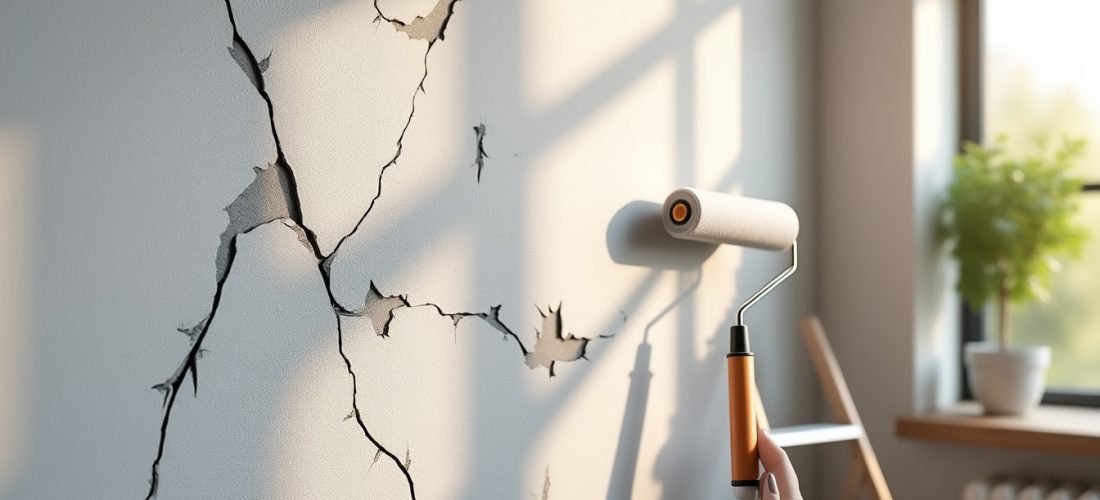
Non-woven wallpaper, known as papier peint intissé, has become a preferred solution for quick interior updates. Its fiber-based structure and vinyl surface combine practicality and design in everyday renovation projects. Many homeowners and professionals now choose it to mask defects and speed up room makeovers.
The material performs well on surfaces with minor cracks, offering a forgiving option for walls that are not perfectly smooth. Practical questions about installation, maintenance, and aesthetics naturally follow and deserve concise answers. The next section lists compact takeaways under the heading A retenir :
A retenir :
- Rapid covering for murs abîmés and imperfections
- Direct wall pasting for faster facilité d’installation
- Washable surfaces suitable for busy living spaces
- Removable in large strips when walls are prepared
Non-woven wallpaper composition and technical benefits for renovation
Following the concise takeaways, this section explains material composition and technical advantages that matter for renovation projects. The blend of cellulose and polyester gives papier peint intissé stability, while a vinyl finish improves durability and cleaning. Understanding these attributes helps decide when intissé outperforms traditional paper coverings.
Core materials and what they mean for walls
This subsection links composition to practical effects on damaged surfaces and masking ability for renovation. The non-woven backing provides thickness that reduces visibility of small cracks and uneven patches on walls. That thicker grammage also increases tear resistance during cutting and handling.
Property Typical characteristic Practical effect Composition Cellulose and polyester fibers Dimensional stability and breathability Surface Vinyl-coated option Improved washability and stain resistance Grammage Medium to high Better masking of uneven walls Removal Peels in strips when primed Easier redecorating without heavy demolition
According to Leroy Merlin, manufacturers emphasize grammage when recommending intissé for imperfect walls. According to 4MURS, direct pasting on the wall reduces handling errors and speeds installation time. According to Zolpan, vinyl-coated intissé suits humid zones when chosen with appropriate specifications.
Surface preparation remains essential despite forgiving material properties, and the next part details the necessary preparation steps before application. Proper adhesion and long-term appearance depend on cleaning and priming the substrate correctly.
Surface preparation steps:
- Remove loose paint and dust
- Fill deep holes with repair compound
- Apply primer or undercoat for adhesion
- Ensure the surface is dry and smooth
Installation methods, speed and common pitfalls for quick relooking mural
This section follows material insights by focusing on the practical workflow for facilité d’installation and rapid application. Applying intissé directly onto an adhesive-coated wall is the hallmark of faster installation compared with classic wallpaper methods. Good technique reduces seams, bubbles, and wasted material on renovation sites.
Step-by-step application on imperfect walls
This subsection connects the installation method with surface quality and expected speed on typical renovation jobs. First, measure and cut strips allowing pattern repeat, then apply adhesive to the wall following manufacturer guidance. Finally, hang strips from top to bottom, smoothing air pockets with a plastic spatula for a clean finish.
Essential tools list:
- Long metal ruler and sharp cutter
- Paste brush or roller for wall application
- Plastic spatula for smoothing seams
- Seam roller for matching edges
« I installed intissé across a hallway and finished twice as fast as with classic paper, with fewer mistakes. »
Alice D.
Common mistakes and practical corrections
This subsection explains typical errors and realistic remedies to avoid costly rework during renovation. Applying ordinary paste or pasting strips on a damp wall often causes adhesion failures and visible defects. The remedy is to use recommended adhesive and allow the surface to dry thoroughly before hanging.
Problem Cause Corrective action Peeling at edges Insufficient adhesive or dusty wall Reclean and reapply appropriate wall glue Visible seams Poor alignment or mismatch Check pattern repeat and adjust cutting Bubbles under surface Trapped air during smoothing Smooth toward edges with spatula immediately Damage during cutting Low grammage material or blunt blade Use sharper cutter and support edge
A quick tutorial video can help visualize these steps and reduce installation anxiety for first-timers and pros alike. Watching a concise demonstration clarifies hand positions and smoothing techniques for a neat outcome.
Design choices and long-term maintenance for renovated interiors
After mastering installation, the final practical concern becomes matching design with durability for sustained decoration. Non-woven wallpapers present varied textures and patterns that suit both modern and traditional interiors. Selecting a surface finish balances aesthetic intent with cleaning requirements and expected wear.
Styling rooms with intissé for lasting impact
This subsection links style choices to room function, advising where intissé adds the most value for a renovation. In living rooms and bedrooms, textured and patterned intissé creates focal points while hiding minor flaws attractively. In hallways or kitchens, choose washable or scrubbable surfaces to tolerate higher traffic and staining risks.
Maintenance checklist:
- Dust regularly with a soft brush or vacuum
- Spot-clean with mild soap and damp cloth
- Avoid abrasive cleaning agents to protect vinyl
- Test cleaners on an inconspicuous area first
« I refreshed my small apartment using intissé and later removed panels with minimal wall damage, which surprised me. »
Marc L.
Removal, reuse and environmental aspects
This subsection examines end-of-life options and environmental trade-offs that matter for sustainable renovation choices. When walls are primed, intissé typically peels off in large strips without steam stripping, simplifying future redecorations. Consider recycling options where available and choose products with lower PVC content when possible.
« As a contractor, I advise clients to prioritize surface prep, which pays off in easier removal and better finishes. »
Sophie B.
« The product saved time on a tight schedule while delivering a modern look for several rooms. »
Paul N.
Source : Leroy Merlin, « Comment poser du papier peint intissé », Leroy Merlin, 2023 ; 4MURS, « Poser du papier peint intissé : le guide », 4MURS, 2022 ; Zolpan, « Papier peint intissé et usages », Zolpan, 2021.


