


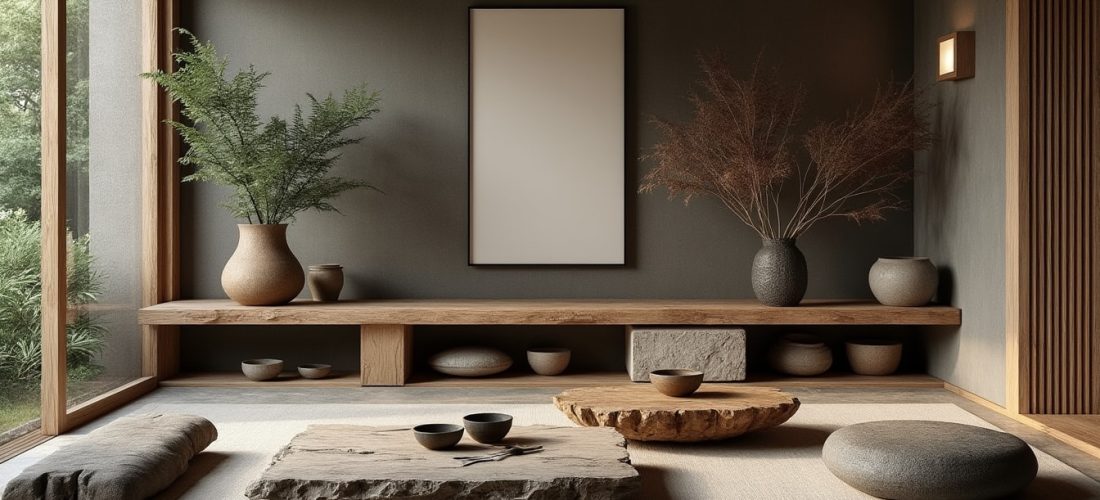
The Wabi-Sabi approach values the beauty that appears when materials age and change over time, offering a calm alternative to mass consumption and glossy perfection. This perspective finds strength in simplicity, worn textures, and an acceptance of the imperfect as an aesthetic and ethical choice.
Adopting Wabi-Sabi asks for deliberate slowness, careful selection of materials natural, and a preference for objects with story and use. This practical shift prepares a compact list of core reminders to apply in interiors.
A retenir :
- Raw materials, solid wood, stone, handcrafted ceramics, crumpled linen
- Priority to empty space, breathing rooms, limited object selection
- Asymmetry, varied textures, surfaces patinated by use
- Durable choices, repairs, local craft, objects with history
Wabi-Sabi principles for natural materials and layout
Building on the reminders, this section explains the founding principles that guide choices of elements bruts and their arrangement in a room. Understanding these codes helps orient decisions about form, texture, and the balance between object and void.
Principle Meaning Practical example Kanso Simplicity, reduction of excess A single handcrafted vase on a clear shelf Fukinsei Controlled asymmetry for organic balance Off-center object groupings on a sideboard Shibumi Understated elegance and subtlety Neutral palette with textured fabrics Shizen Naturalness without artifice Unfinished wood, exposed stone elements Seijaku Quietude and contemplative calm A reading nook with soft, indirect light
Kanso promotes reducing visible items to essentials, while Fukinsei invites an organic, human composition of objects and voids. These principles act as a map when selecting furniture and finishes for a room meant to age gracefully.
Intended practical outcomes include calmer rooms, textures that reveal time, and carefully curated pieces chosen for use and story. This will help when moving from principles to concrete choices for furniture and textiles.
« Mon salon wabi-sabi m’apporte une sérénité que je n’avais jamais connue auparavant. »
Marie D.
Materials deserve attention because they carry the visual record of use, and the Wabi-Sabi aesthetic prioritizes tactile authenticity over visual polish. Selon Houzz.fr, many homeowners report increased domestic wellbeing after adopting these material choices.
Label for materials list:
- Wood types prioritizing durability and grain appeal
- Stone examples favoring matte finishes and feel
- Textiles such as linen and cotton with natural creasing
From principles to furniture choices and textures
Following the preceding ideas, furniture selection becomes an exercise in longevity, repairability, and visible use rather than brand-new uniformity. Prioritizing robust pieces and second-hand finds supports both authenticity and environmental restraint.
Choosing the right textures and finishes enhances the sensory qualities of a room and prepares it for daily life and patina. This perspective naturally leads to practical styling of accessories and lighting in living areas.
Choosing durable, repairable furniture
This subsection links to furniture by focusing on repair and longevity as design criteria rather than disposability. Selecting solid wood and joinery that can be repaired aligns form with ethical use and future aging.
- Prefer solid-wood frames with visible joinery
- Seek furniture with replaceable upholstery options
- Choose finishes that accept natural wear and touch
« Le véritable wabi-sabi ne peut être acheté dans un magasin ; il se développe naturellement. »
Emiko T.
Textures, light and accessory selection
This part connects texture choices to lighting and accessory use, stressing how low, warm light reveals material depth and imperfection. Selecting accessories with history helps the eye accept asymmetry and worn surfaces naturally.
- Use layered, low-level lighting for soft shadows
- Favor accessories showing age or handcrafted marks
- Limit color range to natural, earthy palettes
Integrating Wabi-Sabi into daily life and sustainability
As a consequence of mindful furnishing, Wabi-Sabi encourages a lifestyle oriented toward repair, slow consumption, and appreciation for objects with meaning. This shift supports environmental aims while cultivating domestic calm and less clutter.
Linking slow living with practical actions helps residents keep the style sincere rather than performative. The following examples and actions show how to repair, conserve, and live with chosen objects responsibly.
Practical repair and care actions
This section connects repair techniques to everyday maintenance, describing small actions that prolong the life of furniture and fabrics. Basic skills like re-gluing joints and darning textiles turn objects into lasting companions rather than disposable goods.
- Repair rather than replace damaged household items
- Favor local craftsmen for restoration and maintenance
- Create a small kit for textile mending and surface care
« J’ai transformé mon appartement en commençant par une seule étagère, et cela a changé ma relation aux objets. »
Luc P.
Wabi-Sabi and measurable sustainability outcomes
According to sector reports, many adopters cite better wellbeing after adopting slower decor habits, and empirical studies link repair practices to lower material turnover. Selon Houzz.fr, adopters often report meaningful domestic improvements.
Aspect Observation Source note Products sold as Wabi-Sabi Frequent industrial presentation rather than handmade European market surveys, 2023 Artisan preference Strong recommendation for handmade pieces Design guides and craft networks, 2023 Cost versus standard decor Higher initial cost balanced by durability Market analyses, 2023 Corporate adoption Use in quiet spaces for concentration Case studies in tech offices, 2023
« Choisir l’artisanat, c’est investir dans des objets qui durent et racontent une histoire. »
Anne L.
Selon Le Cri de la Mouette, craft and repair practices were highlighted as central to authentic Wabi-Sabi approaches in recent commentary. Selon Emiko Tsukamoto, the aesthetic remains rooted in values rather than mere surface styling.
Final practical suggestion: start small with one shelf or corner and observe how objects age with use and light. This measured approach makes Wabi-Sabi an achievable and meaningful domestic practice.
Source : Houzz.fr, 2023 ; Le Cri de la Mouette, mars 2023 ; Emiko Tsukamoto, 2023.


