


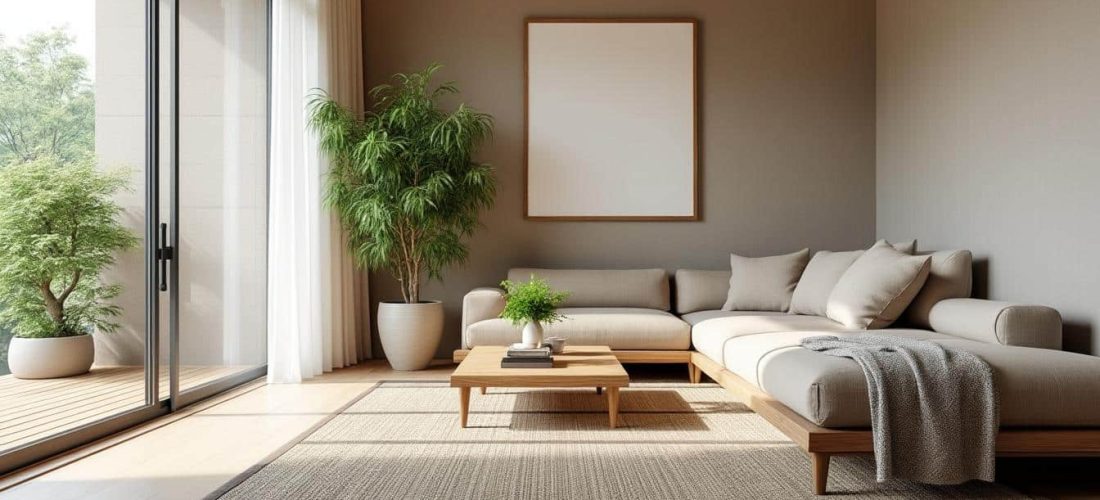
The Japandi approach blends Japanese restraint with Scandinavian warmth in residential design. It favors natural materials, soft light, and a pared-down layout that reduces visual clutter.
Homeowners seek that balance today, wanting calm spaces that still feel welcoming. Next are concise takeaways showing what defines Japandi and how to apply it.
A retenir :
- Balanced palette of warm neutrals and deep earthy accents
- Natural materials such as oak, linen, ceramics, and jute textures
- Low-profile furniture and integrated, clutter-free storage solutions
- Soft layered lighting and emphasis on imperfect handcrafted elements
Building on those takeaways, the Japandi roots explain how Japanese simplicity complements Scandinavian warmth. Understanding these origins clarifies the five aesthetic pillars that follow.
Origins and philosophies: Wabi-sabi meeting Hygge
This fusion arose from long cultural exchanges that elevated simplicity and comfort in domestic design. Selon COCOmaison, the movement combines respect for natural materials with practical human-scale furniture.
Wabi-sabi contributes acceptance of imperfections through raw ceramics, worn woods, and subtle asymmetry. Hygge supplies soft textiles, warm lighting, and convivial layouts that make spaces feel lived-in and safe.
« I simplified my living room and found calmer mornings, fewer decisions, and more peace. »
Marie D.
Five aesthetic pillars that shape Japandi interiors
This section outlines the practical design pillars derived from the philosophies above. Selon Dezeen, these pillars often guide sustainable choices and artisanal production in contemporary projects.
Characteristic Scandinavian influence (Hygge) Japanese influence (Wabi-sabi) Colors Tones clear and luminous such as whites and beiges Tones deep and earthy such as browns and muted greens Materials Light woods like oak and soft textiles like wool Dark woods, bamboo, paper, unglazed ceramics Furniture Functional, straight lines, comfortable seating Low profiles, asymmetry, minimal ornament Philosophy Warmth, conviviality, practical comfort Simplicity, imperfection, natural processes Accessories Cozy throws, soft cushions, warm lighting Handcrafted ceramics, weathered objects, botanical minimalism
Key aesthetic elements:
- Neutral base with selective dark accents for depth
- Visible grain and texture in wooden surfaces
- Textural contrast through linen, wool, and jute
- Subtle handmade objects that reveal time and use
With those pillars in mind, material and light choices determine a successful Japandi interior. Practical room-by-room recommendations follow to turn theory into daily comfort.
Choosing floors and grounding the space
This topic focuses on how flooring sets the visual weight and warmth of a room. Selon Architectural Digest, the right floor choice amplifies light and supports long-term durability.
Flooring Aesthetic Maintenance Best room Light oak parquet Expands space, warm undertone Periodic oiling, moderate care Living room, bedroom Teak or smoked oak Rich contrast, deeper mood Regular cleaning, occasional refinishing Dining room, study Polished concrete Minimal, modern, cool base Sealing required, easy to clean Kitchen, hallway Natural stone or tile Textural and durable, earthy feel Grout care, occasional sealing Kitchen, entryway
Preferred flooring options:
- Light oak for brightness and warmth
- Smoked wood for focused, intimate zones
- Polished concrete for a minimal, modern base
- Natural stone for kitchen durability and texture
Layer floors with natural rugs to add comfort without cluttering the eye. Choosing tones that coordinate with furniture preserves visual calm and functional flow.
« Replacing heavy curtains with linen voiles transformed mornings and softened the whole apartment. »
Lars N.
After mastering materials and layout, room-level tips make Japandi livable and personal. Practical examples and testimonies illustrate the lasting lifestyle potential.
Living room and bedroom styling for serene daily life
This section connects material choices to everyday comfort and use in private spaces. Selon COCOmaison, a limited palette with tactile contrasts supports psychological calm.
Keep seating low and proportionate to sightlines, and reserve visual accents for a few handcrafted pieces. A bonsai or a single dried branch often suffices to bring nature inside.
Room styling tips:
- Low wooden bed or sofa for proportional calm
- Layered textiles in linen and wool for warmth
- Single statement ceramic or kintsugi piece as focal point
- Hidden storage to maintain uncluttered surfaces
« Guests often remark on the calm atmosphere; my space finally feels intentionally restful. »
Akiko S.
Kitchen, storage, and practical workflows
This subsection links circulation and storage to the Japandi promise of functional beauty. Prioritize integrated cabinetry and durable surfaces that age gracefully under daily use.
Kitchen styling tips:
- Matte cabinetry in wood or dark tones for contrast
- Open shelving for curated, functional display
- Durable stone or wood countertops with clear maintenance plan
- Bamboo utensils and handcrafted ceramics for daily ritual
« The Japandi approach prioritizes craft and restraint, making pieces last beyond seasonal trends. »
Tom N.
Small experiments test big effects: switch a rug, swap a lamp, or add one handcrafted vase to gauge the change. These modest shifts often deliver measurable improvements in usability and atmosphere.
Source : Charlotte van den Bosch, « Intérieur Japandi | Calme et simplicité naturelle », COCOmaison.


