


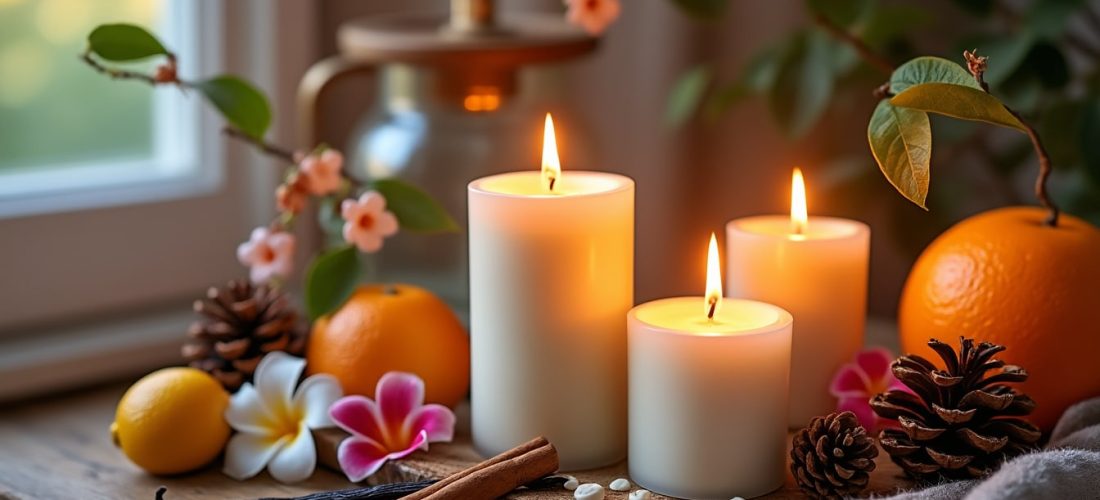
I have always regarded fragrance as a personal signature that communicates mood and memory. Recently I discovered scented candles as an extension of that signature within the domestic environment, blending light and aroma. They combine subtle illumination, decoration and scent to produce a distinct and memorable home presence.
Scented candles affect atmosphere, well-being and social perception with tangible subtlety and grace. Choosing notes and waxes intentionally creates coherence between personal perfume and the broader olfactory identity of a home. This observation naturally opens practical guidance and specific choices for everyday life.
A retenir :
- Coherent olfactory signature for the living space
- Improved mood and focused atmosphere for occupants
- Pairing perfume and candles for sensory continuity
- Practical candle care for safe and efficient diffusion
How scented candles shape a home’s olfactory identity
Following the practical points, scented candles play a central role in defining a home’s olfactory identity and character. A carefully chosen candle can echo wardrobe perfumes and underscore décor themes to create a coherent sensory statement. Understanding materials and scents helps to achieve that consistent identity effectively.
Materials, scent choices and visible cues for identity
This subsection explains how the combination of vessel materials and fragrance shapes perception in each space. Glass, metal and wood vessels interact differently with light and aroma, influencing the perceived warmth of a room. Selecting complementary materials supports the candle’s role as both decoration and olfactory marker.
Space Material Scent Home Wood Orange blossom Office Metal Citrus Retail Glass Vanilla Bedroom Textile-wrapped Lavender
Designers often match vessel texture and color to existing objects to reinforce visual harmony and scent association. A wood vessel with a cedar or vetiver blend reads as warm and grounded within a living room palette. These choices make the candle a clear contributor to the home’s olfactory identity.
Scented items also act as memory cues that visitors link to your space, shaping long-term impressions and hospitality. Thoughtful pairing of aroma and material can encourage welcoming interactions and reinforce the intended mood. This prepares the discussion toward scent psychology and behavioral effects.
Scent pairing ideas:
- Woody vessels paired with cedar or vetiver notes
- Metallic accents matched to bright citrus aromas
- Glass jars combined with soft vanilla or amber accords
- Textile finishes with floral or herbal calming scents
« I matched my cedar candle to my woody cologne and guests commented immediately on the cohesive atmosphere. »
Thibault S.
How scent influences mood and behavior in domestic spaces
Because identity is also emotional, scent operates directly on mood and behavior through associative pathways. Choosing notes with specific psycho-emotional profiles can encourage relaxation, alertness or focused creativity within particular rooms. Understanding these effects allows intentional design of an olfactory environment.
Scientific and design perspectives on aroma effects
This section connects empirical findings to practical candle selection for wellbeing and productivity. According to the University of Oxford, environmental cues influence attention and mood through multisensory integration. Designers use these findings to select scents that support intended activities and social uses of rooms.
Aroma effects overview:
- Lavender and chamomile for relaxation and sleep support
- Citrus and bergamot for energy and improved alertness
- Sandalwood for grounding and meditative clarity
- Vanilla for comfort and reduced perceived stress
These associations are commonly used by interior professionals to influence dwell time and mood in public spaces. According to Sensorielle Design, lighting and scent together amplify perceived warmth and welcome in commercial settings. That linkage suggests practical pairings for domestic rooms, which will be detailed next.
Practical room applications and measured outcomes
This subsection gives concrete examples of scent use across rooms and times of day for clear outcomes. For a home office, citrus notes can boost concentration during focused work periods, while lavender suits evening reading and unwinding. According to aromatherapy research, these strategies often correlate with improved subjective sleep quality and stress reduction.
Scent Typical effect Recommended room Lavender Relaxing, sleep-promoting Bedroom Citrus Energizing, attention-supporting Office Sandalwood Grounding, meditative Living room Vanilla Comforting, soothing Retail or lounge
Room-specific examples support deliberate scheduling of scent use across morning, afternoon and evening routines. Simple rotations avoid olfactory fatigue and maintain the distinctiveness of each scented moment. The following practical section covers pairing with personal perfume and safe candle management.
Pairing personal perfume with home scents and practical care
Because scented candles often operate alongside personal fragrances, deliberate pairing improves coherence and avoids clashes. Matching top, heart or base notes between perfume and candle builds a layered, non-conflicting scent narrative within the home. Practical care ensures safe diffusion and preserves the intended olfactory identity over time.
Techniques for scent pairing and continuity
This subsection describes pairing strategies that respect both perfume and ambient scent without overpowering either. Start by identifying dominant notes in a personal fragrance and select candle accords that share compatible families. Simple experiments, such as burning a small candle while wearing the perfume, can confirm pleasant synergy.
« Lighting a lavender candle helped my sleep within a few evenings of consistent use, and the change was noticeable. »
Marie L.
Candle care tips:
- Allow full melt pool on first burn to prevent tunneling
- Trim the wick to five millimeters before each lighting
- Limit burning sessions to around two hours maximum
- Rotate scents by room to avoid olfactory saturation
Safety, wax quality and long-term scent strategy
This subsection addresses safety practices and material choices for consistent diffusion and indoor air quality. Use quality waxes and proper wick sizing to reduce soot and extend fragrance performance while maintaining safety. An informed approach protects health, preserves scent integrity and reinforces the home’s olfactory identity.
« That candle transformed our boutique’s atmosphere and customers stayed longer, noticing the comfort it added. »
Lucas P.
Personal testimony and professional opinions often converge on the importance of material quality and concentration control for authentic scent identity. According to Sensorielle Design, integrating lighting and scent yields a measurable effect on perceived warmth and comfort in designed spaces. Careful practice sustains the olfactory signature and invites meaningful social impressions.
« Using high-quality wax and precise perfume concentration matters for true olfactory identity within a home environment. »
Anna R.


