


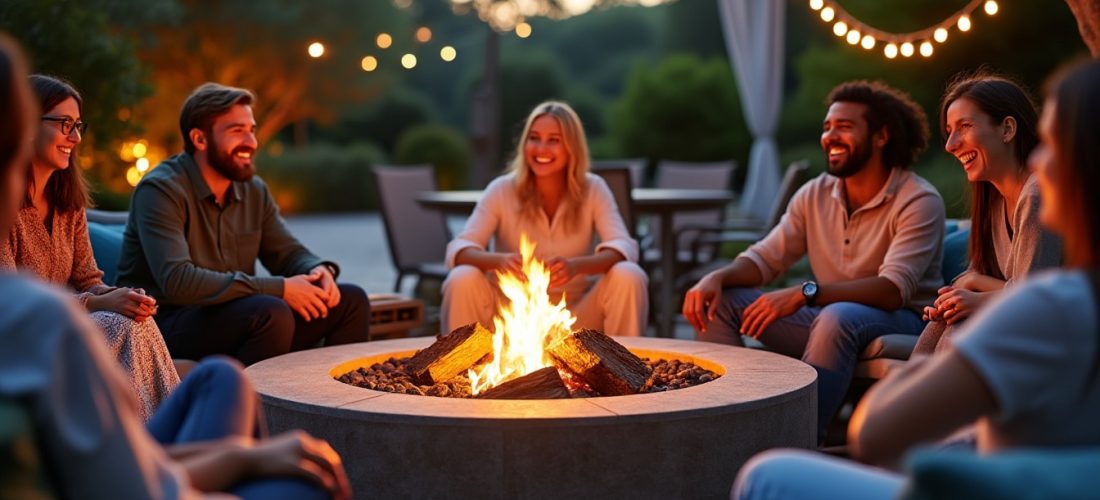
An outdoor hearth reshapes how families and friends gather around an open fire in gardens. It creates a tangible focal point that encourages conversation, warmth, and lingering evenings outdoors. Consider these practical elements before designing a foyer extérieur to enhance shared moments.
Decisions about zoning, materials, lighting, and planting determine the quality of the space. This guide links design choices to how a place becomes central for convivialité and repeated moments partagés. Read the key takeaways that follow to frame the practical steps ahead.
A retenir :
- Central hub for conviviality and shared moments outdoors
- Warmth and ambiance for evening gatherings and relaxed exchanges
- Flexible zones for dining, lounging, planting, and seasonal use
- Durable materials and low-maintenance structures for long-term comfort
Building on those takeaways, the foyer extérieur organizes space and invites reunion. Choosing durable materials and clear zones anchors the garden into a true living area, and this choice naturally leads into details about structures and finishes.
When a hearth becomes the focal point, circulation and proximity to the house matter greatly. Positioning the hearth near a kitchen access point supports easy movement for meals and hosting. According to local design guides, proximity reduces friction and encourages more frequent réunion and shared use.
Material Weather resistance Maintenance Typical aesthetic Wood (treated) Excellent Low Warm and natural Natural stone Exceptional None Elegant and authentic Concrete (finished) Very good Low Modern and clean Corten steel Excellent Very low Industrial, trendy
Materials guide help balance durability with atmosphere in an outdoor hearth setting. The table above summarizes resistance, upkeep, and the visual effect to help decisions. According to several designers, matching material to garden scale prevents visual overload.
Space zoning supports both large gatherings and quiet moments without conflict. Create a reception area, a vegetated buffer, and a functional storage zone for tools and fuel. Simple separations like raised planters or low walls preserve flow while defining purpose.
Layout examples illustrate what works on tight urban plots and larger lots alike. Small terraces often gain by using elevated wooden decks with integrated planters for intimacy. In rural gardens, masonry elements create durable seating and a clear centrality for the hearth.
Zoning and circulation for a garden hearth
This section links the hearth to daily circulation and guest flow in the garden. Arrange paths so that movement between kitchen, dining, and lounge is smooth and intuitive. A clear layout reduces effort and supports spontaneous gatherings centered on the hearth.
Practical zoning includes visual and physical separators that do not isolate the space. Use low murets, planting beds, and a mix of fixed and movable seating. These elements let the hearth act as a lieu central without imposing rigid boundaries.
Small narratives help imagine real use: a family serving food, friends arriving with drinks, and a child discovering a hidden herb patch. These micro-scenes show how zoning supports ritual and casual exchange. Such scenes often drive final material and furniture decisions.
Selon Supervivo, well-placed hearths extend usable evenings significantly by providing targeted warmth. Selon Clem Around The Corner, modular planters create flexible boundaries suitable for evolving needs. Selon community design guides, proximity to utilities favors frequent use and easier maintenance.
Location choices naturally move the discussion to long-lasting structures and finishes. Durable choices reduce upkeep and keep the hearth welcoming year after year. The next section examines materials and integrated furniture in detail.
Because durability shapes ongoing convivialité, selecting materials and fixed furniture matters. Integrating built-in seating, raised planters, and robust finishes secures comfort and reduces seasonal rework, and this practical approach opens the discussion on planting and ambiance techniques.
Fixed elements determine maintenance cycles and how the hearth will age with use. Builders often recommend treated wood, stone, or corten steel for visible structures. These choices protect investment while creating the intended aesthetic and atmosphere for gatherings.
Structures, integrated seating, and storage
This subsection links structural choices to daily comfort and ease of use around the hearth. Built-in benches and storage reduce clutter and keep cushions handy for spontaneous evenings. A modest storage niche for wood or cushions preserves the look and makes use effortless.
Concrete or stone murets work well as seating and windbreaks, providing year-round solidity. Bench-coffers combine seating with storage and are discreet when not in use. These solutions maintain the room-like quality that turns an outdoor area into a true foyer.
Label for the list of materials and finishes:
- Treated wood for decking and planter faces
- Natural stone for hearth surrounds and low walls
- Corten steel for sculptural fire features
- Outdoor cushions and weatherproof textiles for comfort
«I built a bench-coffre and it changed our evenings; cushions always at hand, friends linger longer.»
Laura N.
Design choices also influence safety and compliance with local regulations for open flames. Check local rules for distances, fuel type, and permitted appliances before installation. Responsible choices ensure the hearth remains a social asset rather than a liability.
Comparative table of typical installations
Installation type Best for Maintenance level Typical materials Compact firepit Small terraces and balconies Low Corten, steel, ceramic Masonry hearth Larger gardens, permanent focal point Low Stone, brick Table-foyer Dining-centric gatherings Low Steel, glass Braziers and portable Flexible seating layouts Medium Corten, cast iron
These comparative rows help match installation to intended use, size, and upkeep capacity. Choosing the right type avoids regret and aligns the hearth with patterns of use. Simple decisions about portability or permanence shape the social life of the space.
After choosing structure and materials, focus on planting, light, and textiles to craft the mood. Thoughtful planting produces privacy and scent, while layered lighting creates a comforting, warm ambiance chaleureuse, and this leads to practical decorating tips for immediate application.
Planting provides both function and sensory richness for the hearth area. Use climbers, aromatic borders, and ornamental grasses to create depth and filter sightlines. Placement of fragrant plants near seating enhances evening exchanges and makes the space memorable.
Planting for scent, shade, and shelter
This section links botanical choices to the overall user experience around the hearth. Grasses add movement and sound, while jasmine and other climbers give fragrance that marks the hour. A small tree or large shrub serves as a visual anchor for the hearth area.
Practical tips include placing aromatic herbs near the dining area for immediate use. Bins of rosemary or thyme double as decoration and seasoning for meals. Such pragmatic planting supports both use and beauty.
Short decoration checklist:
- Layered lighting with warm white bulbs
- Textiles designed for outdoor use and comfort
- Portable planters for seasonal rearrangement
- Fire-safe rugs and heat-resistant accessories
«We moved a small jasmine trellis next to our hearth and evenings became perfumed and calmer.»
Sophie N.
Lighting strategy is decisive for a welcoming hearth in the evening hours. Aim for multiple sources: ground-level markers, string lights under a pergola, and lanterns for tables. Warm light temperatures between 2700K and 3000K preserve intimacy and visual comfort.
Practical staging, textiles, and hosting tips
This paragraph links styling choices to hosting ease and the durability of furnishings. Opt for modular seating that adapts to guest counts and blend fixed benches with movable chairs. Textiles should be weatherproof and easy to store to keep the area tidy.
Include small storage solutions such as a bench with compartments for blankets and tools. These details eliminate friction when nights cool and encourage longer gatherings. A tidy environment invites repeated use and strengthens the role of the hearth as a central place.
«Our friends lingered two hours longer after we added warm lights and a few extra cushions.»
Yann N.
To further illustrate, a short how-to video shows quick staging and lighting tricks that change atmosphere fast. Practical demonstrations of lighting layering and textile arrangement help visual learners. Watch a clear example to replicate affordable staging in your own garden.
Seasonal adjustments keep the hearth area usable throughout the year with small changes. Swap cushions, add weatherproof covers, or relocate planters to adapt to weather. These small acts prolong convivial moments and protect your investment.
«A simple rug and a set of lanterns transformed our terrace into a real living room outdoors.»
Design Team N.
Final practical note: prioritize safety, local regulations, and neighbor consideration when installing a hearth. Proper planning ensures the hearth becomes a reliable backdrop for many shared evenings rather than a source of dispute. Thoughtful attention to these constraints preserves the pleasure of gathering.
Source : «Pourquoi un foyer extérieur crée une ambiance ?», Supervivo ; «Aménage ton jardin en un foyer convivial : guide pratique», Clem Around The Corner ; Laura, «J’aime mes plantes», Blog.


