


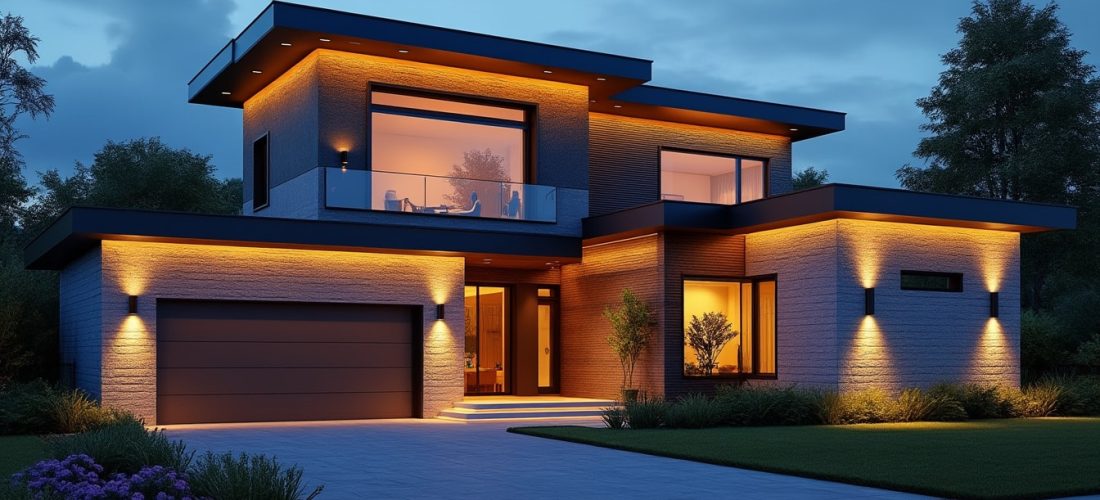
Facade lighting transforms the perception of a house after dusk and highlights fine architectural details. Good choices combine safety, aesthetic value and energy efficiency for enduring outdoor appeal. This practical guide focuses on selecting fixtures that respect architecture and create a warm ambiance.
Consider luminaire type, beam direction and color temperature when planning any éclairage project for a façade or garden. Choices such as appliques, ground spots or projectors change how materials and forms are perceived at night. Keep these priorities in mind when you read the practical checklist under A retenir :
A retenir :
- Warm directional lighting for architectural reliefs and curb appeal
- IP65-rated fixtures for exposed façades and wet conditions
- Consistent color temperature preserving material hues and visual coherence
- LED fixtures with motion sensors for energy savings and security
Choosing façade lighting types to enhance house architecture
Following the checklist, selecting the right luminaire category depends on both function and the chosen architectural style. Practical choices reconcile form and performance to achieve a coherent mise en valeur of the building at night. The section that follows explains optimal fixtures and spacing to guide the next topic about color and material matching.
Wall appliques and entrance illumination
This subsection links the main selection to real entry situations and comfort needs after dark. Wall appliques offer soft, bi-directional light that marks doors and porches without glare, improving welcome and security. Mounting near 1.6 meters and choosing IP65-rated models helps preserve fixture integrity in regular rainfall.
Appliques come in varied finishes to match the façade material and design exterior, from brushed aluminium to warm brass. When used correctly, these luminaires create a balanced esthétique and avoid over-illumination that flattens reliefs. A careful choice here prepares the use of ground lighting and accent projectors discussed next.
Fixture selection must respect the NF C 15-100 rules and ensure a separate exterior circuit protected by a 30 mA differential. Proper installation and spacing reduce maintenance needs and avoid safety risks when damp conditions arise. The following table summarizes common fixture types and practical recommendations for façade use.
Fixture type Best use Recommended IP Typical mounting/spacing Wall appliques Entrances, porches, vertical relief IP65 1.6 m height, every 1.5–2.5 m Ground spots Texture highlighting, paths IP67 1.5–2 m spacing, flush mount Bollards Path guidance, perimeter IP65 1.5–2 m spacing, low height Accent projectors Feature emphasis, trees, statues IP65 Directed beams, adjustable aim
Design choices should favor LED technology for low consumption and long lifespan around façades. LEDs reduce heat output and allow dimming or tuning of color temperature for consistent mood control. Good installation practices then lead naturally to color temperature choices and material matching.
Photo example of a softly lit stone façade with warm accents
Ground spots and bollards for paths and texture
This paragraph links the choice of wall lighting to exterior path guidance and low-level fixtures. Ground spots deliver grazing light that reveals stone textures and subtle reliefs without overpowering surfaces. Bollards structure circulation and contribute to safety while preserving an elegant design extérieur.
Spacing rules matter: 1.5 to 2 meters yields uniform guidance without creating obvious shadows or glare. Solar bollards can serve low-traffic zones, but wired 12 V or mains-fed options remain preferable for strong architectural effects. Proper placement completes the composition and sets the stage for color temperature decisions in the next section.
- Placement guide for paths and entrances:
- Even spacing to avoid shadow bands
- Flush mounts for pedestrian safety
- Select rugged materials for high humidity
« I swapped old halogens for LED wall appliques and immediately noticed better texture on the stonework. »
Marie L.
Color temperature and material matching for façade illumination
Building on fixture selection, color temperature determines the perceived material quality and mood after dark. Choosing the correct kelvin range preserves natural hues and supports either a cozy or modern impression. This section offers practical rules and a comparative table to guide temperature choices for common materials.
Kelvin ranges and visual effects
This subsection ties the color decision to material response and desired ambiance in the façade composition. Warm whites around 2700 K render stone and wood pleasantly while maintaining a residential warmth. Neutral whites near 4000 K balance color fidelity with a slightly more contemporary character without harshness.
Kelvin range Perceived tone Best material match Recommended application 2700 K Warm, cozy Wood, light stone Entrances, terraces 3000 K Soft warm Brick, textured plaster Accent reliefs 4000 K Neutral, natural Concrete, modern finishes Architectural outlines 5000–6500 K Cool, crisp Dark composites, metal cladding Security perimeter, contemporary facades
Mixing temperatures on a single façade often creates visual discord unless carefully zoned for purpose. A reliable rule is warm tones for welcoming zones and neutral or cool tones for contour emphasis and security. Clear planning here prepares installers for compliance and wiring choices addressed next.
- Color selection checklist:
- Match kelvin to dominant façade material
- Prioritize coherence across visible elevations
- Use dimmable drivers for evening adjustments
« Choosing 3000 K for our brick house restored the real color without giving a clinical feel. »
Julien R.
Video showing creative uses of kelvin and dimming for modern façades
Illustration of mixed material lighting with warm and neutral zones
Installation rules, safety standards and energy performance
After selecting fixtures and color, installation must respect electrical rules and reduce long-term costs. Proper circuits, IP ratings and corrosion-resistant fixings extend service life while ensuring user safety. This section details norm requirements and smart options to lower consumption and maintenance burden.
Norms NF C 15-100 and practical wiring rules
This paragraph links the prior design choices to mandatory electrical protections and separation of circuits. The NF C 15-100 requires a 30 mA differential for exterior lighting and recommends isolated external circuits. Installers must avoid penetrating exterior insulation without sealing and must use ICTA conduits for cable protection.
- Installation quick rules:
- Separate exterior lighting circuit with 30 mA differential
- Place low-voltage transformers in IP68 enclosures
- Use inox fixings and verify seals annually
« The electrician advised separate circuits and a protected 12 V transformer for our garden lights. »
Claire D.
Energy savings, maintenance and smart controls
Smart controls and LEDs cut operating costs while enabling varied ambiance through schedules and sensors. Motion detectors and twilight switches avoid unnecessary use while dimmers adapt scenes for different evenings. These measures reduce consumption and secure surroundings without harming the visual intent of the façade.
- Maintenance and control options:
- Use motion sensors for infrequent lighting
- Program dimming schedules for seasonal changes
- Prefer LED modules with replaceable drivers
Video demonstrating smart façade lighting scenes and integrations with home systems
Final illustration of efficient facade lighting combining LEDs and controllers
« The smart app allows me to lower light levels after midnight, saving noticeable energy. »
Paul N.
Source : ERCO, « Éclairage des façades : mettre en scène des bâtiments », ERCO ; La Maison Saint-Gobain, « Comment éclairer sa façade », La Maison Saint-Gobain ; LEDYi Lighting, « Éclairage de façade : le guide complet », LEDYi Lighting.


