


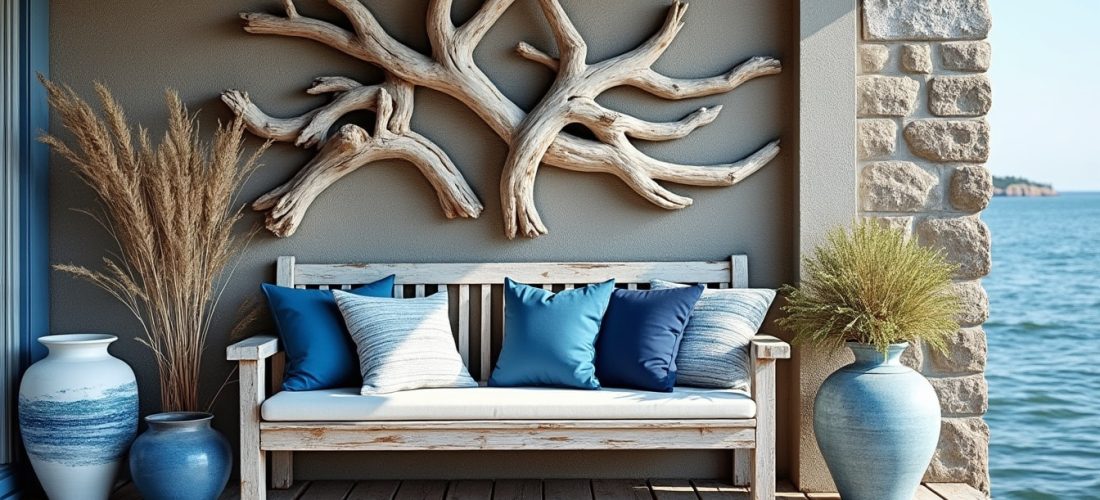
The coastal aesthetic relies on simple materials and deliberate textures to evoke calming seaside memories for outdoor spaces. Many homeowners choose a palette anchored by blue tones and weathered wood to create an authentic maritime atmosphere.
Collecting and reusing found timber reduces environmental impact while providing unique forms for furniture and lighting. The essentials follow in a short, actionable list that guides design choices and practical steps.
A retenir :
- Ambiance bord de mer chaleureuse et matériaux durables
- Mobilier en bois et patines naturelles pour cohérence visuelle
- Usage de bois flotté recyclé, esthétique et résistant
- Cordages marins réutilisés pour ancrage décoratif et texture
Coastal material choices: This short list highlights the main elements to prioritize for durable outdoor design. The following section examines how those materials shape a coherent maritime composition.
Coastal outdoor design with driftwood and blue for durable exteriors
Building on the essentials, coastal outdoor design blends bois flotté and blue accents to frame views and define seating areas. This approach balances practicality, weather resistance, and visual warmth for terraces near the bord de mer.
Choosing materials adapted to maritime exposure
This subsection links material selection to longevity under salt spray and wind conditions near the plage. Practical choices prioritize naturally weathered wood, robust cordage, and simple finishing methods that preserve character.
According to artisans, selecting pieces without deep rot or active infestation reduces repair needs over time. According to designers, matching weight and grain helps ensure stable outdoor assemblies under fluctuating weather.
Material choices: Use this short, specific list to compare outdoor options and maintenance expectations. The next table summarizes common materials and their recommended uses for coastal exteriors.
Material Typical outdoor use Climate resistance Maintenance Bois flotté Tables, benches, frames Good against spray when selected carefully Gentle cleaning and natural oil Cordage chanvre Suspensions, decorative ties Moderate if kept dry between uses Light oiling, periodic replacement Corde synthétique Structural ties, railings High UV resistance Rinse with fresh water Palette recyclée Tables, planters Variable by species Ponçage and marine-grade finish
- Rustic assembly methods for structural clarity and ease of repair
- Color accents in muted blues for subtle maritime reference
- Textured textiles and plantings to complement natural wood tones
« I transformed beach finds into sturdy terrace tables that withstand coastal seasons »
Marie L.
Design choices here lead directly to selection and preparation techniques, which define how long pieces will last and how they will age attractively. The next section explains selection, cleaning, and light finishing in practical detail.
Selecting and preparing driftwood for maritime outdoor decoration
As selection informs durability, preparing driftwood correctly reduces long-term maintenance and preserves natural grain. Hands-on cleaning and measured sanding maintain form while removing salt and debris from each piece.
Inspection and gentle cleaning procedures
This section connects inspection steps with tangible cleaning methods for found wood before any assembly. Practitioners should remove sand and salt by brushing and rinsing with fresh water to avoid trapped moisture.
According to artisans, a careful visual and tactile check prevents using compromised timber that would shorten furniture life. According to designers, simple light sanding preserves the polished surface created by sea exposure.
Wood preparation steps: Follow these concise, actionable steps to ready pieces for assembly or finishing. The subsequent sub-section covers joining techniques and marine-grade adhesives appropriate for outdoor use.
- Brush off sand and salt with natural fiber brush
- Rinse pieces in fresh water and air dry fully
- Light sanding to remove sharp splinters and level surfaces
- Inspect internally for soft spots before assembly
Joining, reinforcing, and finishing for exterior resilience
This passage links preparation to robust assembly methods such as hidden dowels and resin adhesives for exposed furniture. Combining mechanical joinery and discreet cordage ensures both strength and the desired rustique aesthetic.
Knot Primary use Difficulty Visual effect Nœud de chaise Accroche d’objets Easy Secure and neat Nœud de cabestan Fixation sur poteau Medium Traditional marine look Nœud plat Jonctions décoratives Easy Discrete and tidy Nœud de chaise double Support lourd Hard Very robust visual
- Chevilles et collages marins pour joints invisibles et durables
- Cordage enroulé pour renforts et accent visuel
- Use of stainless fittings when metal required for load-bearing
« During a workshop I learned knotting techniques to secure heavy suspended planters safely »
Paul N.
Careful joining and knot work naturally lead to considerations of ongoing maintenance that sustain the beauty and function of coastal pieces. The next section outlines seasonal routines and practical repair tips for extended service life.
Maintenance routines and craft techniques for long-lasting coastal furniture
Given robust assembly and proper selection, regular maintenance prolongs life and preserves the intended rustic charm of maritime pieces. Simple seasonal care prevents degradation and maintains the calming ambiance marine.
Seasonal care for coast-facing furniture
This subsection connects seasonality with specific care actions including rinsing and light oiling after storm exposure near the plage. Owners should rinse salt, dry in shade, and apply a conserved oil annually to wooded surfaces.
- Rinse with fresh water after salt spray events
- Allow full drying in shaded, ventilated area
- Apply natural oil once yearly for protection
- Replace frayed cordage promptly for safety
« After three seasons my benches retained their patina thanks to annual oiling and rinsing »
Claire N.
Repair, refinement, and design adaptation over time
This paragraph ties repair strategies to the larger practice of adaptive coastal design, where pieces evolve with use and exposure. Minor repairs using matching materials keep authenticity while restoring function.
According to homeowners, small annual interventions avoid larger replacements, preserving both aesthetics and budget. According to local designers, embracing natural aging yields a more convincing design côtier identity.
« Using cordage transformed our pergola’s look while reinforcing its structure effectively »
Antoine N.
Seasonal care and repair techniques complete the practical cycle from selection to upkeep, enabling enduring outdoor living by the bord de mer. Thoughtful maintenance keeps the space functional and visually cohesive for years.


